By James Batten, 299 Lighting · Published · Updated
In short
Big light or lamps? How to choose a ceiling light that is soft, not harsh: glass diffusers, sizes, bulbs, dimming and when to use flush fittings.
The Telegraph's "big light vs little lamp" feature on 8 November 2026 described two camps: those who want "the quickest and most efficient way to be able to see what they're doing (ie, flicking a wall switch)" and those "intent on curating a warm and inviting atmosphere" (The Telegraph). One interviewee said the overhead lights "feel really loud to me, like I'm in a hospital room".
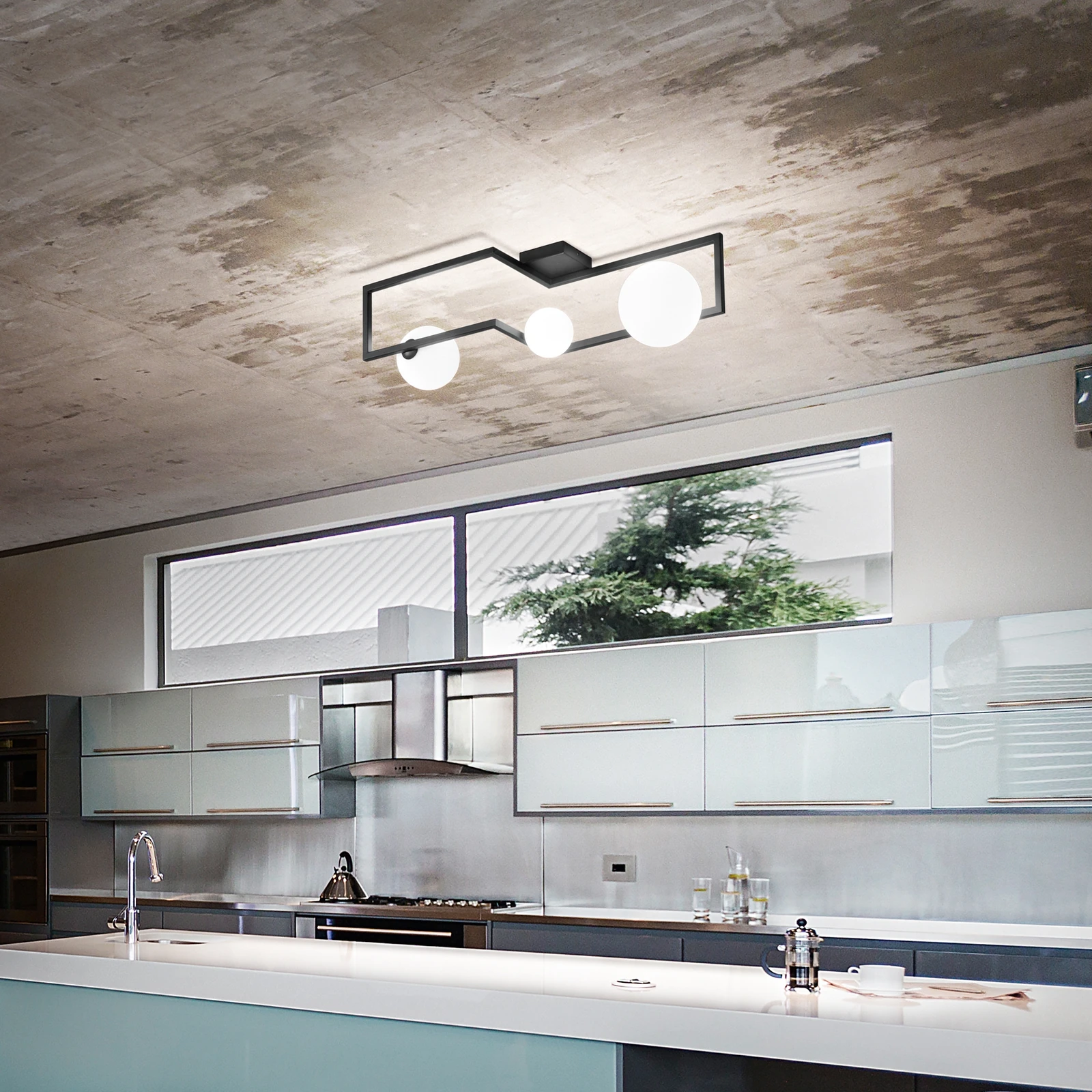
The ceiling light gets the blame, but the problem is usually the wrong fitting, the wrong bulb or no dimmer. A well-chosen ceiling light gives soft, even light when you need it, and works alongside table lamps, floor lamps and wall lights when you want something cosier. This guide explains how to choose one.
Why the big light can feel harsh
- Exposed or clear bulbs create bright points of glare
- Cool white light can feel clinical in living spaces
- Too much light from one point flattens the room
- No dimming means it is either on full or off
Each of these can be fixed with the right fitting and bulb.
Choose a diffuser that softens the light
The diffuser is the part of the fitting that the light passes through. It makes a big difference to how harsh or soft the light feels.
| Diffuser | Effect | Good for |
|---|---|---|
| Opal or acid-etched glass | Soft, even glow with little glare | Living rooms, bedrooms, hallways |
| Sandblasted glass | Softened light with some sparkle | Kitchens, dining rooms |
| Cut crystal | Sparkle and reflections | Dining rooms, statement spaces |
| Glass balls or beads | Decorative light play | Bedrooms, dressing rooms |
| Open or clear | Bright and direct | Utility spaces, task areas |
See our glass lampshades guide for more on glass types.

Ceiling lights to consider
Each of these is described from its specification on our site. All are IP20, for indoor use only.
- Smarties PL1: a white varnished metal frame with a white blown glass diffuser, in sizes from Ø33 to Ø60 cm. A simple, soft-glow flush light for living rooms and bedrooms. Takes an E27 bulb
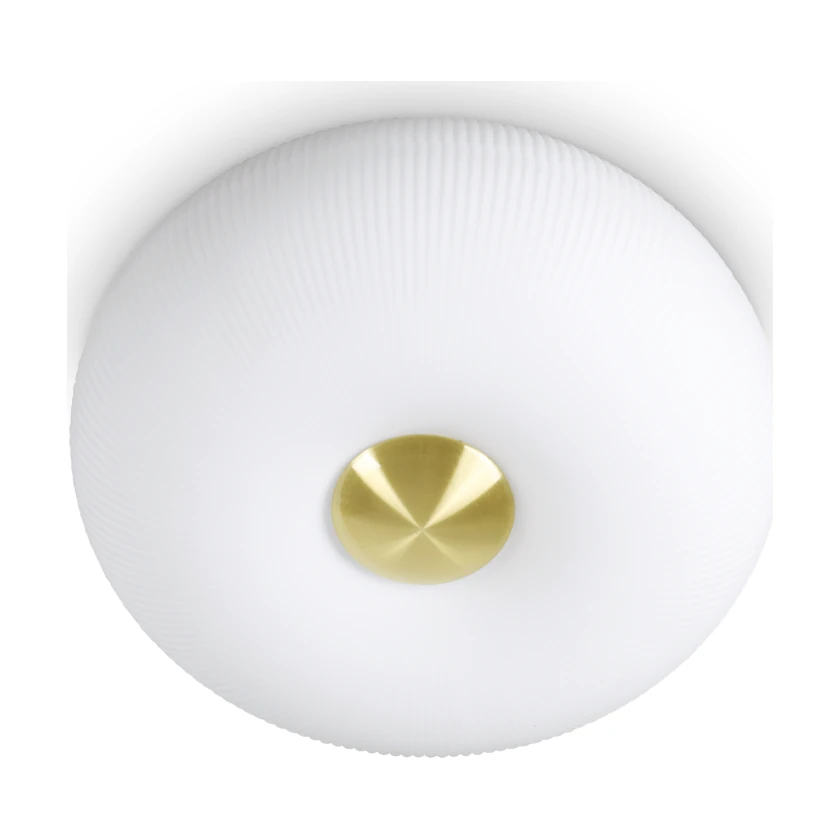
- Bloom PL1: a powder painted or plated metal ceiling cap and frame with a white acid-etched blown glass diffuser, in black or brass, Ø22 or Ø30 cm. Takes an E27 bulb
- Ninfea PL2: a plated or powder-coated metal base with white acid-etched blown glass diffusers, in brass or white, with two or three lights. Takes GX53 lamps
- Celine PL2: an enamelled metal frame with sandblasted clear glass diffusers and chrome glass holders, with two to four lights. Takes E27 bulbs
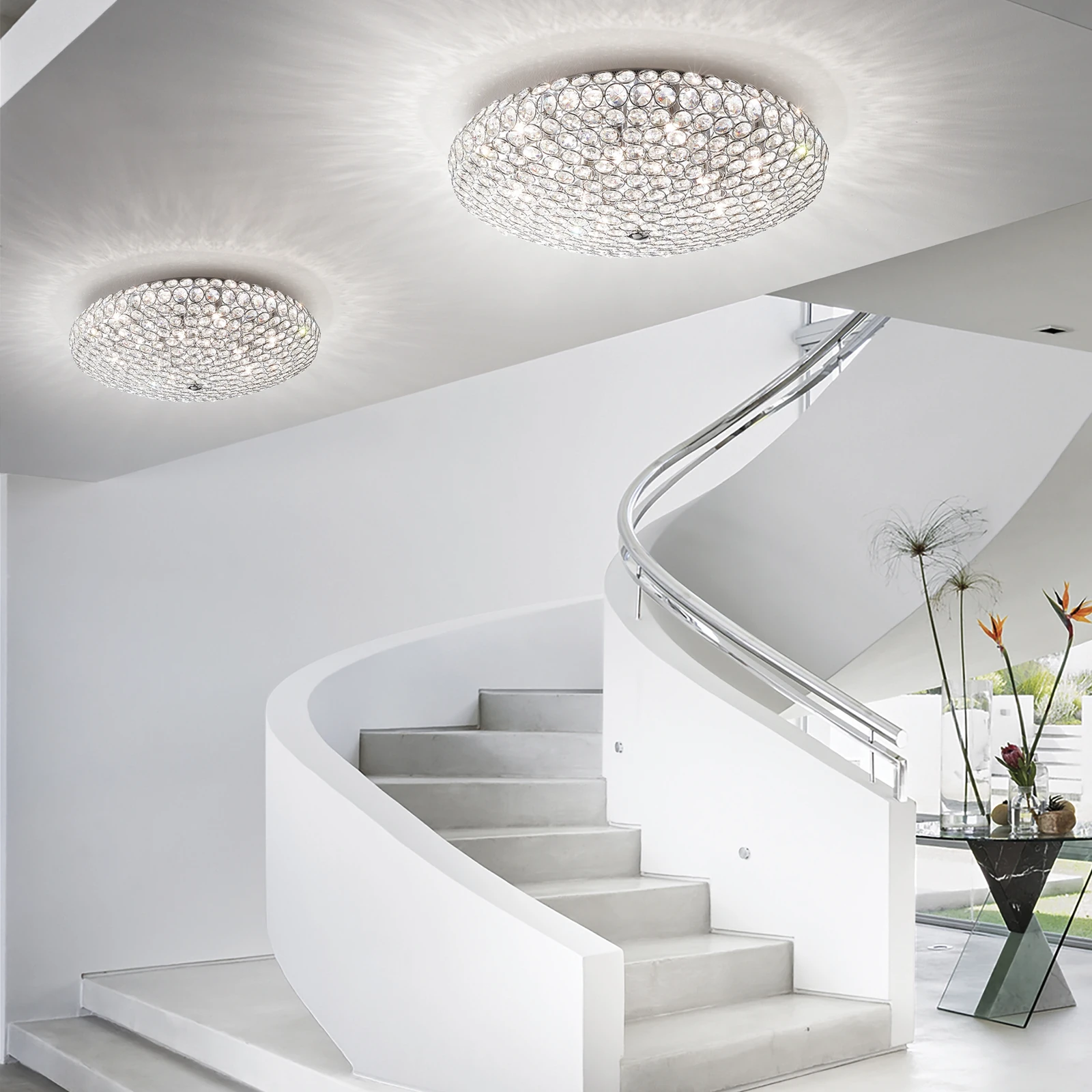
- Pasha' PL10: a metal frame with a diffuser of cut crystal pearls, in chrome or gold, Ø55 cm. A statement fitting for a dining room. Takes E14 bulbs
- Neve PL12: a metal frame with decorative glass balls on nylon strings, Ø63 cm. Takes G9 lamps
- Perlage PL10: a metal frame with a round linear structure, in amber, smoked or white, with six to 18 lights. Takes G9 lamps
For more options, browse all ceiling lights, or consider a chandelier or pendant where the ceiling height allows.
Flush, semi-flush or pendant?
- Flush fittings sit tight to the ceiling. Best for low ceilings and hallways
- Semi-flush fittings drop slightly. A good middle ground for average rooms
- Pendants and chandeliers hang lower. Best for higher ceilings and over tables
Check headroom, especially in hallways and on stairs. See hallway and staircase lighting and the chandelier size guide.

Size the fitting to the room
A ceiling light that is too small looks lost, while one that is too large can overwhelm a room. As a rough guide, larger rooms suit larger or multi-light fittings, and small rooms suit compact flush fittings. Check the dimensions on each fitting's page and compare them with your room.
Bulbs make the difference
- Warm white, around 2700K, for living rooms and bedrooms. See 2700K vs 3000K
- Dimmable LED bulbs if the fitting is on a dimmer. See LED dimming explained
- The right cap, such as E27, E14, G9 or GX53. See light bulb caps explained
- Never exceed the maximum wattage shown on the fitting's page
- Good colour rendering makes skin and finishes look natural. See CRI 80 vs CRI 90
Dim it and layer it
A dimmer turns a harsh big light into a soft background glow. Use the ceiling light at full brightness for cleaning or tasks, then dim it and switch on lamps and wall lights in the evening. Our guide to layered living room lighting explains how to combine them, and the floor and table lamps guide helps you choose the lamps.
Room by room
Living room
A soft, diffused flush or semi-flush light on a dimmer, plus at least two lamps.
Bedroom
A gentle diffused ceiling light with bedside lamps or wall lights. See our bedroom lighting guide.
Dining room
A statement fitting such as crystal or glass, centred over the table. See dining table pendant lighting.
Kitchen
Brighter, even light, often combined with spotlights or pendants over an island. See kitchen island pendants.
Home office
Even light without glare. See home office lighting.
Installation and safety
Ceiling lights are usually wired into the lighting circuit. Use a qualified electrician, especially for new circuits, heavy fittings or bathrooms. In bathrooms, choose a fitting with a suitable IP rating: see bathroom lighting and IP ratings.
Need help?
For larger projects, see recessedlighting.co.uk on hospitality lighting. Or send us an enquiry and talk to the 299 Lighting team.
Frequently asked questions
Why does my ceiling light feel harsh?
Usually because of exposed bulbs, cool white light or no dimmer. A diffused fitting, warm white bulbs and a dimmer soften it.
What colour temperature is best for a living room ceiling light?
Warm white, around 2700K, gives a softer, more relaxing light.
Should I choose a flush or pendant ceiling light?
Flush fittings suit low ceilings and hallways. Pendants and chandeliers suit higher ceilings and spaces over tables.
Can I dim any ceiling light?
Only with dimmable bulbs or LED, and a compatible dimmer switch. Check the fitting's page and the bulb packaging.